Foundation installation
Full foundation installation for larger or more complex structures, including perimeter footings and seismic-compliant designs.
Learn more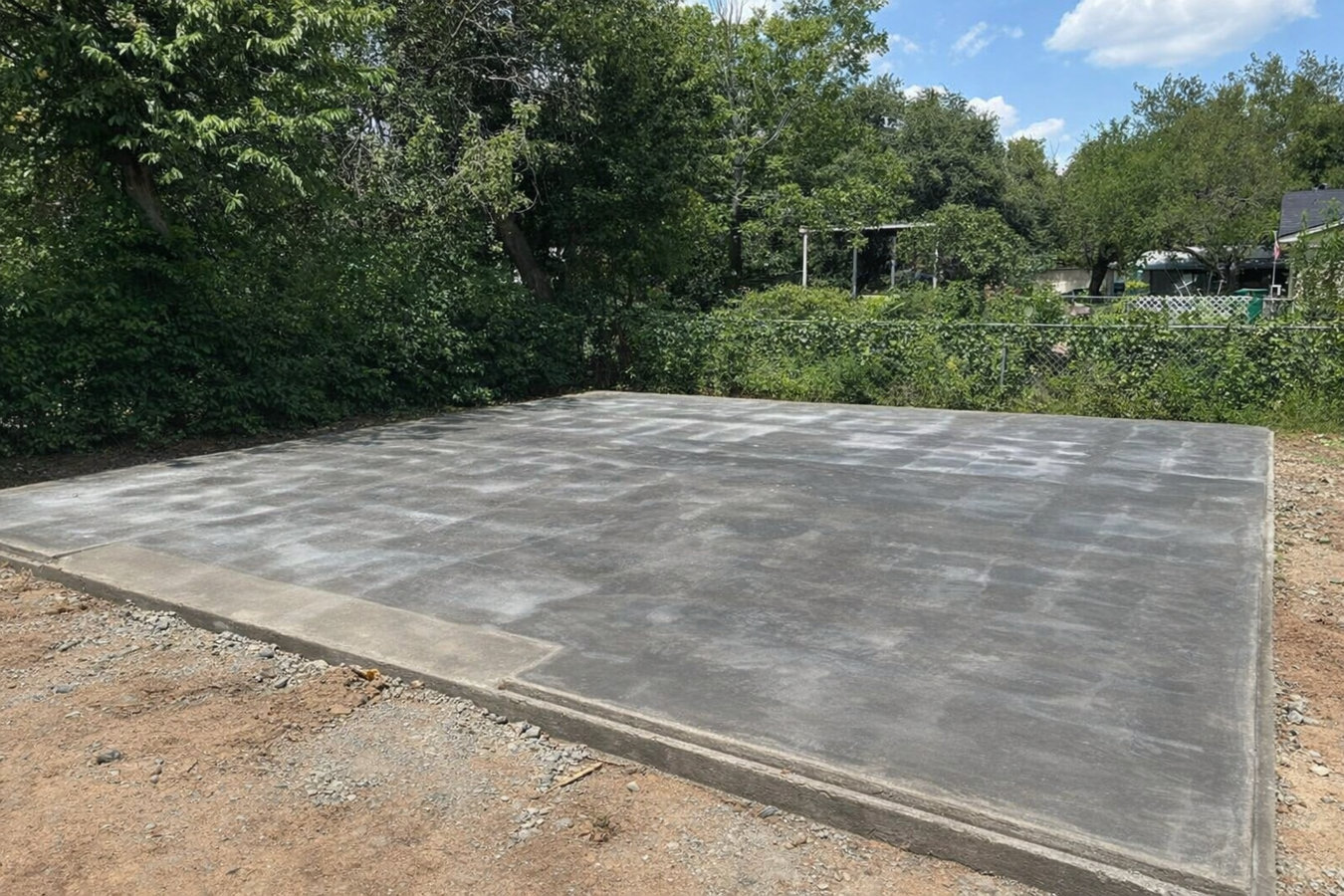
Starting a new build or adding a structure? A slab foundation done right means no callbacks, no cracking, and no problems when you sell.
Slab foundation building in Lodi involves compacting the soil, laying a gravel base and moisture barrier, setting steel reinforcement, and pouring concrete to code - most residential jobs take three to seven days of active work, with full cure strength reached in about 28 days. Lodi Concrete handles the entire process, from the first site visit through the City of Lodi permit and final inspection.
The most common reason homeowners call us is a new structure going on their property - a garage, an accessory dwelling unit, a room addition, or an entirely new home on a vacant lot. Whatever the project, slab foundation building is the first step, and cutting corners at this stage creates problems that show up for decades. If you are also planning concrete structures above ground, our foundation installation service covers the full scope of foundation types available, and our concrete footings work is often combined with slab projects to reduce scheduling delays.
If you are adding a garage, ADU, room addition, or new home to a lot that has no structure there yet, a slab foundation is the first thing that needs to happen. A concrete contractor assesses the site, pulls the permit, and builds the slab before any framing begins. There is no guesswork here - no slab, no structure.
Small hairline cracks in concrete are common and usually harmless. But cracks wider than a quarter inch, diagonal cracks at door or window corners, or cracks where one side has shifted higher than the other are signs the slab is moving. In Lodi, this is often tied to clay soil expanding and contracting through wet winters and dry summers - worth having a professional assess before it gets worse.
When a slab shifts or settles unevenly, the walls above shift too. Doors and windows that suddenly stick, drag, or no longer latch are one of the first things homeowners notice. This is especially common in Lodi's older neighborhoods where mid-century slabs have gone through decades of seasonal soil movement without ever being looked at.
If tile, hardwood, or laminate flooring feels damp, buckles, or develops mold underneath, moisture may be migrating up through the slab. This happens when the moisture barrier under an older slab has failed or was never properly installed. A contractor can assess whether surface treatment or a full replacement is the right fix for your situation.
Lodi Concrete builds slab foundations for new homes, garages, accessory dwelling units, room additions, and commercial structures throughout the Lodi area. Every slab we pour starts with site prep done correctly - compacted soil, a proper gravel base, a moisture barrier, and steel reinforcement placed to match the load the structure will carry. We pull all required permits from the City of Lodi Building Division and schedule the pre-pour inspection so nothing gets skipped. We also coordinate with your plumber and electrician to make sure underground lines are in place before the concrete goes down, because cutting into a finished slab is expensive and avoidable.
For projects that need more than just a slab, our foundation installation service covers perimeter footings and more complex foundation types for larger structures. Our concrete footings crew can often be on-site the same week as the slab team, keeping your project on a single schedule.
Suits homeowners building a new home, ADU, or major addition on a prepared lot.
Ideal for detached garages, workshops, and storage structures that need a code-compliant base.
For older Lodi properties where the existing slab is cracked, shifting, or no longer meets current standards.
Suits business owners and property developers who need a larger pour managed to a defined schedule.
Lodi sits on clay-heavy San Joaquin Valley soil that swells every wet winter and shrinks every dry summer. That seasonal movement is one of the main reasons slab foundations crack over time - and it is also why a slab built without proper footing depth and a well-compacted base tends to fail faster here than in areas with stable sandy soil. Our hot summers add another complication: concrete poured in 100-degree heat can crack on the surface before it has a chance to cure properly underneath. Experienced contractors in Lodi schedule summer pours for early morning and use curing compounds to slow the drying process. These are not details you can skip and make up for later.
A large share of Lodi's housing stock was built in the 1950s through 1970s, and many of those properties have slabs that were poured to older standards. If you are adding a new structure to an older property, your new slab may need to be designed to work alongside the existing one - which takes some local experience to get right. We serve homeowners throughout Lodi and in nearby communities including Stockton and Modesto, where similar clay soil conditions and older housing stock create the same kind of foundation challenges.
We visit your property, assess the soil, check access, and take measurements before giving you a number. You receive a written quote that breaks out site prep, materials, reinforcement, and permit fees - not a rough figure over the phone. Replies within 1 business day.
We apply for the building permit through the City of Lodi Building Division and coordinate with your plumber and electrician to schedule underground rough-ins before the pour. Permit review typically adds one to three weeks to your start date - we factor that into the schedule from day one.
Once the permit is approved, the crew grades and compacts the soil, sets the gravel base and moisture barrier, and places the rebar or wire mesh. A city inspector visits to check the reinforcement and forms before any concrete is ordered - this step protects you.
The crew pours and finishes the slab, then manages curing - including wet-cure methods in summer heat. A final city inspection closes out the permit. Once cured, we walk you through the finished work before the next phase of your project begins.
No sales pressure. We visit your site, assess the soil conditions, and give you a clear written quote with permit fees included.
(209) 904-9704We design every slab with the San Joaquin Valley's expansive clay in mind - deeper footings, proper compaction, and a gravel base that stays stable through wet winters and dry summers. This is the difference between a slab that holds for decades and one that cracks in a few years.
We submit the application, schedule the pre-pour inspection, and close out the permit through the City of Lodi Building Division. You never have to call the building department yourself, and your foundation will be on record when you sell the home.
Lodi's Central Valley summers regularly push above 95°F. We schedule pours for early morning and use curing compounds to prevent surface cracking during the cure period. Concrete poured without those precautions in July often shows surface damage within weeks.
Every concrete contractor in California is required to hold a valid license from the California Contractors State License Board. You can verify our license and see our history in two minutes at cslb.ca.gov before signing anything. We carry this requirement so you have a path to recourse if anything goes wrong.
Every slab foundation we build in Lodi is permitted, inspected, and designed for the soil and climate conditions of this specific area. That combination is what makes the difference between a foundation that needs attention in five years and one that does not.
For permit and inspection requirements, see the City of Lodi Building Division. For licensing verification, visit the California Contractors State License Board. For concrete construction standards, see the Portland Cement Association.
Full foundation installation for larger or more complex structures, including perimeter footings and seismic-compliant designs.
Learn moreStandalone concrete footings for posts, fences, deck supports, and load-bearing elements that tie into a new or existing slab.
Learn morePermit slots fill up as the season gets busy - contact us now for a free site visit and written estimate before your project window closes.